
John Carpenter’s Apocalypse Trilogy: Welcome to the End of the World
You don’t have to be a fan of John Carpenter to be a fan of his movies.
You may not know his name. You may not recognize his face. But chances are pretty good you know his work.
Carpenter had already made Dark Star and Assault on Precinct 13 before Halloween put him on the map in 1978. With a tiny budget, a modified William Shatner mask, an unforgettable piano score, and an unknown actress who happened to come from Hollywood royalty, Carpenter created something that would change horror movies forever.
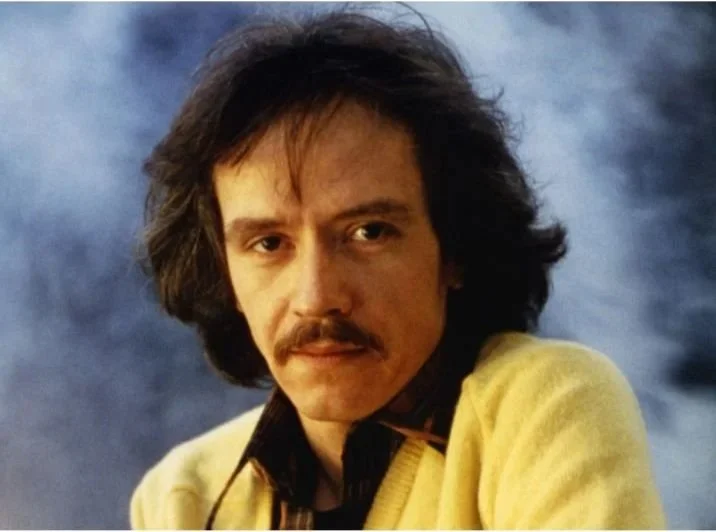

Halloween didn't need elaborate special effects or a complicated mythology. It needed a quiet suburban street, a guy in a mask, and the creeping realization that evil might be standing right behind you.
And then there’s that music.
Carpenter's simple, relentless piano theme became as recognizable as Michael Myers himself. It is one of those rare movie scores that can make you nervous before anything has even happened.
But if you really want to explore the darker corners of John Carpenter's imagination, you have to go beyond Haddonfield.
You have to go to the end of the world.
Welcome to the Apocalypse
There is no official John Carpenter cinematic universe connecting The Thing, Prince of Darkness, and In the Mouth of Madness. No recurring characters. No continuing storyline. No post-credit scenes teasing the next installment.

And yet, these three movies have become known as Carpenter's Apocalypse Trilogy.
Why?
Because each one takes humanity right up to the edge of annihilation.
Sometimes the threat is something ancient and alien. Sometimes it is supernatural. Sometimes it is the terrifying possibility that reality itself isn't what we thought it was. The movies are very different, but they share a common Carpenter philosophy: we may not be nearly as much in control as we think we are.
So, welcome to the end of the world. And don't worry. I won't spoil the endings.
Mostly.
The Thing — Trust No One
If you have seen John Carpenter's The Thing, you've already started the Apocalypse Trilogy.
I have had a crush on Kurt Russell ever since The Computer Wore Tennis Shoes, so it is probably impossible for me to be completely objective about this movie. Fortunately, I don't have to be. The Thing is one of those rare horror movies that earns its reputation.

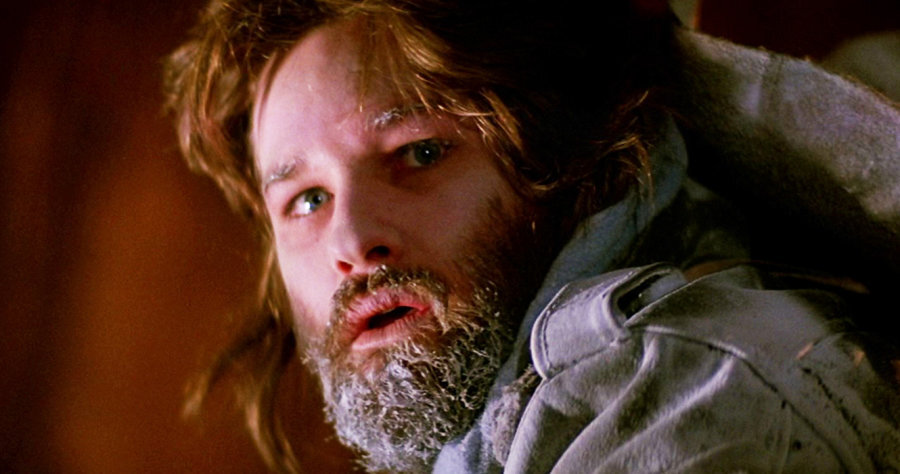
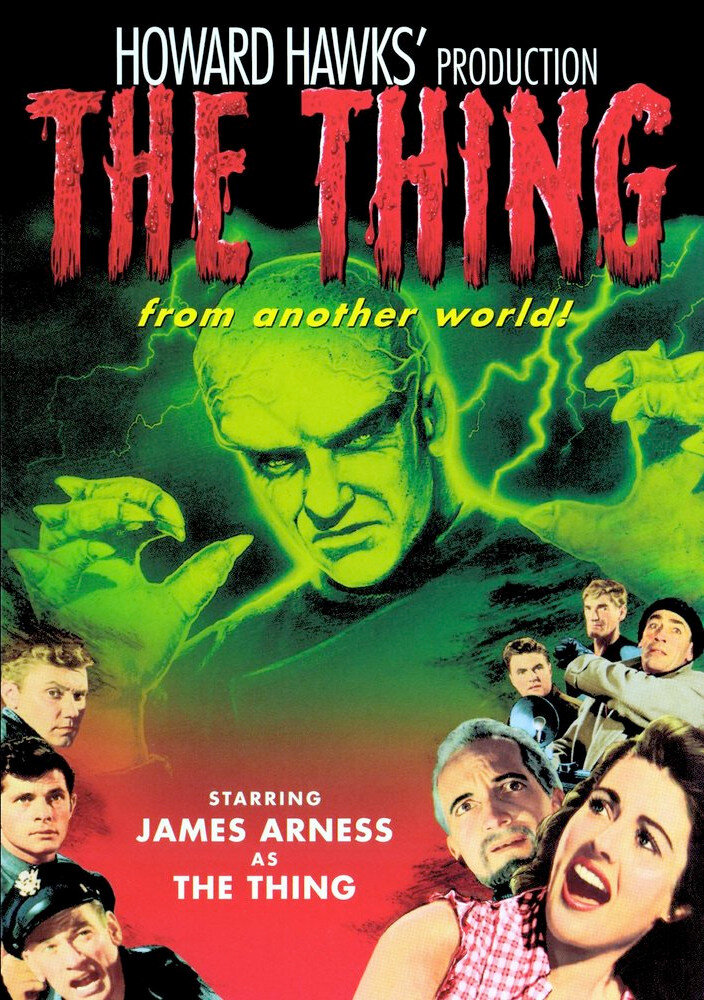
Released in 1982, The Thing is often called a remake of the 1951 film The Thing from Another World. That's technically true, but it doesn't tell the whole story.
Both movies draw from John W. Campbell Jr.'s novella Who Goes There?, but Carpenter's version is much closer to Campbell's original story. Instead of simply fighting an alien monster, the characters are confronted with something far more disturbing:
They don't know who they can trust.
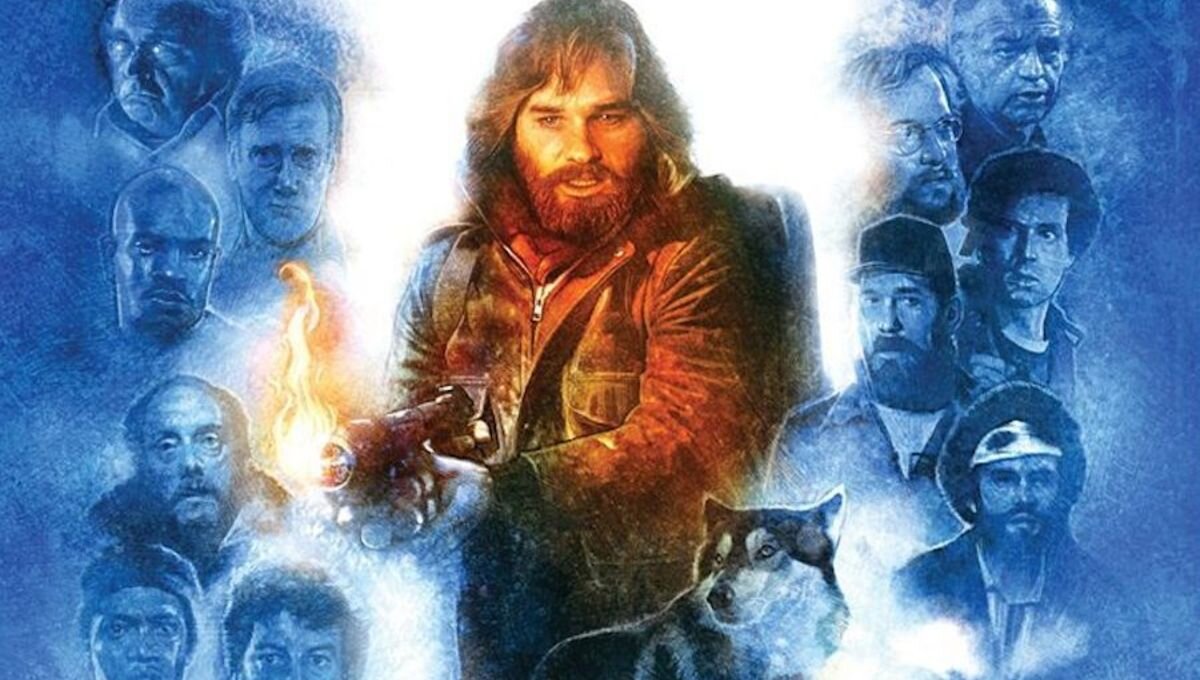
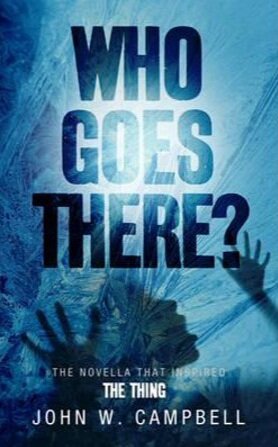
A group of American researchers stationed in Antarctica discovers an extraterrestrial organism capable of perfectly imitating other life forms. Once it gets inside the station, paranoia takes over. And honestly, that may be scarier than the monster itself.
Carpenter understands something fundamental about horror: uncertainty is terrifying. You don't know who has been infected. You don't know when the creature will strike. You don't even know whether the person standing next to you is still a person.
Carpenter uses music to build that tension much as he did in Halloween. The score is sparse and ominous, creating a feeling that something terrible is approaching long before you understand what it is.
And then there are the practical effects.
Some of them are still spectacularly disgusting more than forty years later. The movie's creature effects were designed by Rob Bottin, and Carpenter famously lets the audience see the monster rather than hiding everything behind quick cuts and darkness.
For a movie about an organism that can become anything, the real horror isn't knowing what the Thing looks like. It's realizing that it could look like anyone.
And here's a fun Carpenter Easter egg for those of you keeping score: The Thing from Another World is playing on a television in Halloween. Carpenter was already tipping his hat to the film that would eventually inspire his own version.
Prince of Darkness — Science Meets the Devil
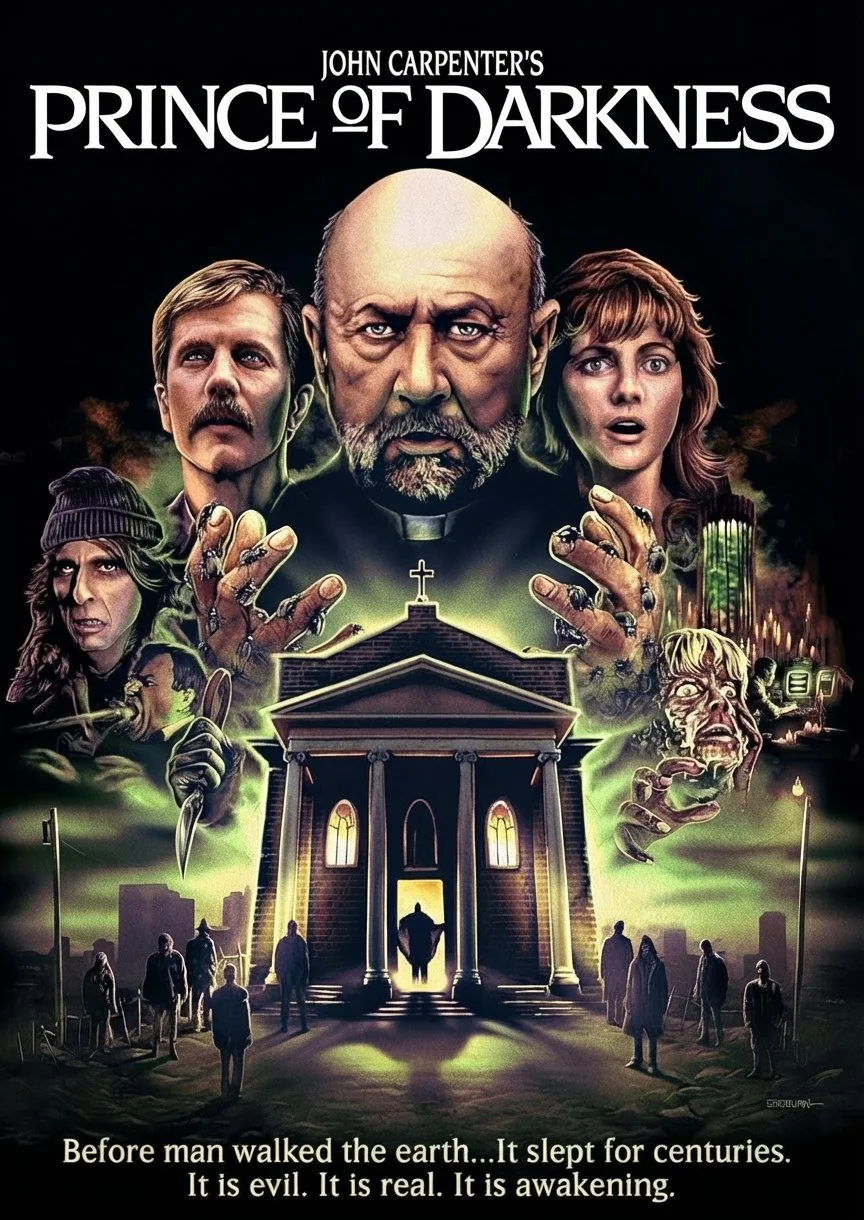
I dressed up as Alice Cooper for Halloween when I was in high school.
At the time, we thought Cooper was a snake-eating, devil-worshiping, crazy psycho from the Underworld. The father of shock rock had an album called Alice Cooper Goes to Hell, and his live performances involved snakes, guillotines, makeup, and enough theatrical mayhem to make him seem like he had personally crawled out of the underworld.
So naturally, it makes perfect sense to find Alice Cooper wandering around in a John Carpenter movie called Prince of Darkness.
What's even better is that Cooper wasn't originally supposed to be in the movie. He had a friend working on the film's effects and asked if he could come watch some of the filming. Carpenter apparently had a better idea and cast him as the leader of a group of mysterious, seemingly soulless street people.
And, because this is Alice Cooper we're talking about, his face ended up being one of the most recognizable images associated with the movie. But Cooper is really just the beginning.
Prince of Darkness is Carpenter's strange collision of science, religion, and cosmic horror.
The story begins when a mysterious cylinder is discovered beneath a church. A group of graduate students is brought in to study it, only to discover that what appears to be an ancient religious artifact may represent something far more terrifying.
The premise sounds almost ridiculous when you say it out loud:
What if Satan wasn't a metaphor?
What if the ultimate evil described by religion was actually something that could be studied, measured, and perhaps even explained by science? That's what makes Prince of Darkness so interesting.
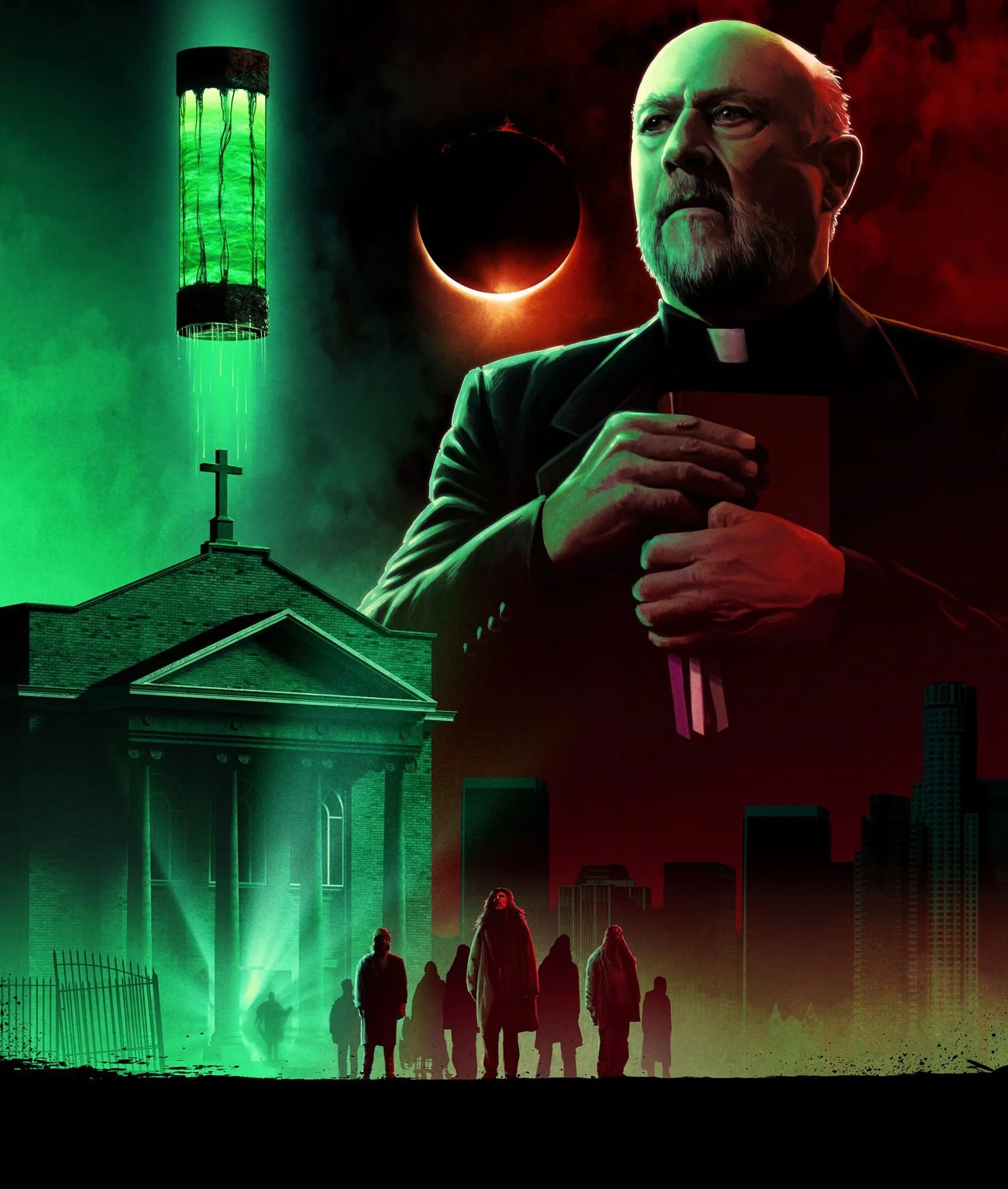
Carpenter doesn't simply pit religion against science. He puts the two in the same room and lets them wrestle with a problem neither one can comfortably explain.
Donald Pleasence plays Father Loomis, which is a particularly fun Carpenter connection for Halloween fans. And yes, the movie is very, very 1987. Expect enormous hair, questionable fashion choices, and practical effects that occasionally announce exactly what decade they came from.
But underneath all of that is an atmosphere that still works. Prince of Darkness is less interested in jump scares than in creating the feeling that something ancient and terrible has been sitting just beneath the surface of our world.
And maybe it has.
In the Mouth of Madness — What If the Story Wins?
The trilogy ends with my personal favorite: In the Mouth of Madness.
And if you are a fan of H.P. Lovecraft, Stephen King, unreliable reality, or stories where you gradually begin to question what the hell is actually happening, this one deserves your attention.
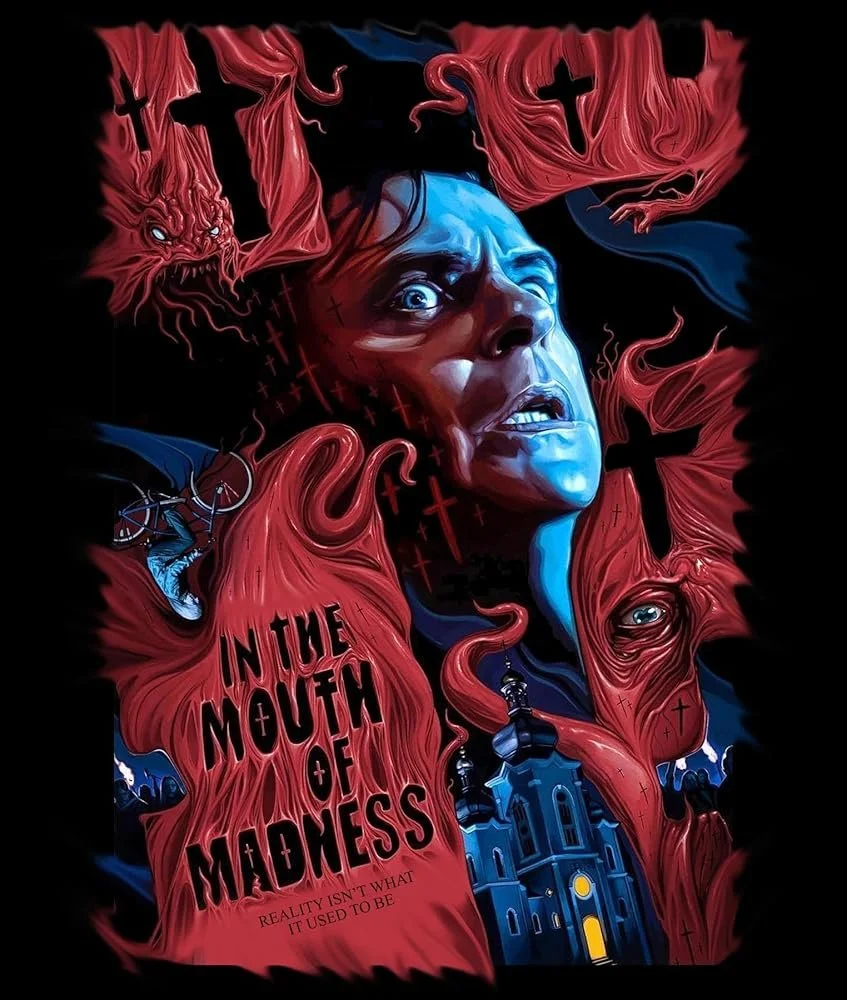
Sam Neill stars as John Trent, an insurance investigator hired to find Sutter Cane, a hugely successful horror novelist who has mysteriously disappeared. Cane's books are so popular that they have begun causing strange behavior among his readers.
At first, Trent treats the wole thing as a bizarre investigation. Then reality starts to unravel.
Sutter Cane is clearly inspired, at least in part, by Stephen King. But there is also a heavy Lovecraft influence running through the movie. Cane's fictional writings contain references to Lovecraft, and the film embraces the idea of ancient forces existing beyond humanity's understanding.
In other words, Carpenter takes the idea of the horror novel and asks a terrifying question: What if the story isn't fiction anymore?
This is also where Carpenter's Apocalypse Trilogy gets especially interesting.
In The Thing, humanity is threatened by something from outside. In Prince of Darkness, humanity confronts an ancient supernatural evil. In In the Mouth of Madness, the threat becomes much harder to define because the very nature of reality is called into question.
And Sam Neill is fantastic.
He spends much of the movie trying to maintain the skeptical, rational perspective of a man who believes there must be a logical explanation for everything. Of course, this is a John Carpenter movie. There isn't.
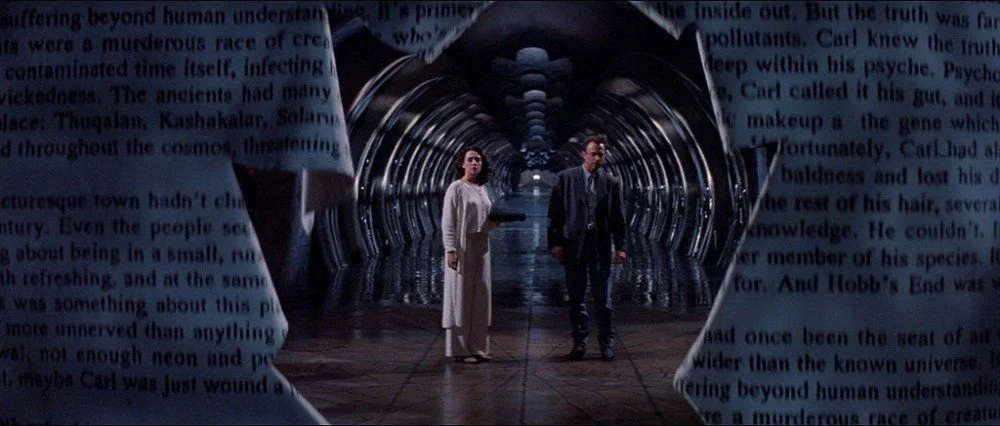
The movie opens and closes with heavy music that feels worlds away from the delicate piano notes of Halloween. Carpenter composed the score with Jim Lang, and the movie's soundscape perfectly fits the increasingly chaotic world Trent finds himself entering.
There is even a brief musical nod to The Carpenters, which is exactly the sort of odd little detail that makes me wonder whether Carpenter was having a private joke at our expense.
Of the three movies, In the Mouth of Madness is the one I return to most often. Maybe it's the Stephen King influence. Maybe it's Sam Neill. Maybe it's the idea that horror isn't something we watch from a safe distance—that sometimes the story can reach through the screen and pull us inside.
Or maybe I just like the idea of a horror movie that makes you question whether the movie itself is happening to you.
So What Makes These Three Movies a Trilogy?
That's the fun part.
There isn't a literal connection between the stories. Carpenter never created these as three chapters of a single narrative. Instead, the connection is thematic. All three movies ask what happens when ordinary people encounter something they fundamentally cannot understand.
The Thing asks whether humanity can survive an enemy that can become anyone.
Prince of Darkness asks whether science and religion are capable of explaining an ancient evil.
In the Mouth of Madness asks whether reality itself can withstand the power of a story.
And Carpenter's answer, in all three cases, is basically: Probably not.
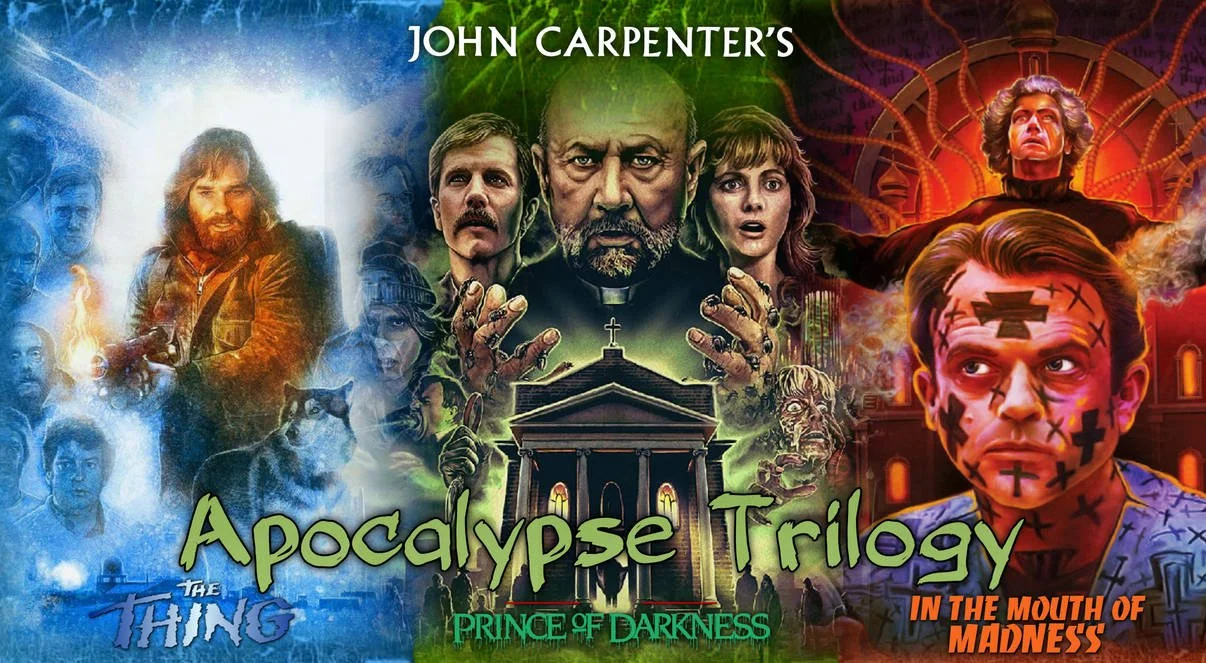
That's what makes the Apocalypse Trilogy so effective. The apocalypse doesn't necessarily arrive with explosions, armies, or giant monsters. Sometimes it starts quietly.
A research station in Antarctica.
A forgotten cylinder beneath a church.
A missing horror novelist.
And then, little by little, the world you thought you understood starts falling apart.
Which One Is Your Favorite?
All three films carry an R rating, and all three contain their share of disturbing imagery, language, and existential dread. But they offer three very different flavors of horror.
Want paranoia and creature horror? Start with The Thing.
Want supernatural horror with a side of theology and science? Try Prince of Darkness.
Want Stephen King inspired Lovecraftian horror, psychological disorientation, and reality coming apart at the seams? In the Mouth of Madness is waiting for you.
As for me?
I'm still Team In the Mouth of Madness.
But ask me to pick my favorite John Carpenter movie overall and you've created an entirely different problem.
That will be harder.